
Exeter Oven Cleaning
Hob, extractor and filter cleaning
The greasy half of the kitchen: gas and ceramic hobs, extractor hoods and canopies, and the metal filters that stop pulling once they fill up.
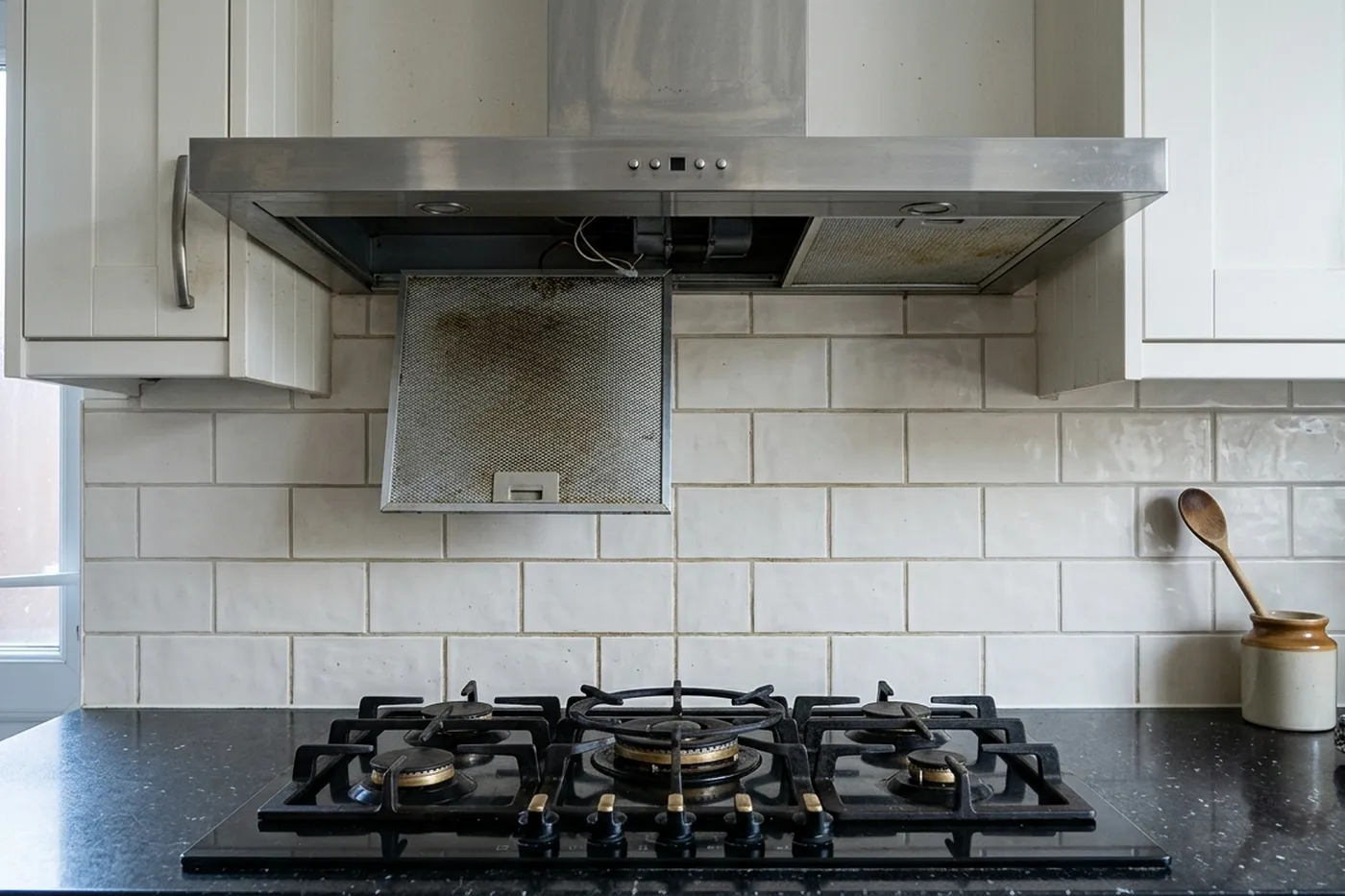
The oven gets the attention and the extractor does the damage. Every time something is fried, a fine film of oil goes up into the hood, through the filter and onto the underside of the canopy. It builds slowly enough that nobody notices, until the fan is running flat out and the kitchen still smells of last night.
Hobs go the same way. Burner ports clog with spillage and the flame goes yellow and uneven on one side. Cast iron supports pick up a sticky coat that transfers onto every pan that touches them. Ceramic tops collect a brown haze that ordinary cleaner will not touch because it is burnt on rather than sitting on top.
This can be a job on its own, and it is often the one that makes the most obvious difference. It is also the natural thing to add to an oven clean, since the setting up has already happened.
What is included
- Gas hob: burner caps, crowns and bases soaked, ports cleared, pan supports degreased
- Ceramic and induction hob: burnt on residue lifted with a blade at the correct angle, then polished
- The hob surround and the seal where it meets the worktop
- Extractor canopy, inside and out, including the underside nobody looks at
- Metal mesh and baffle filters soaked and degreased
- Carbon filters checked and flagged for replacement, since they are not washable
- The fan housing and grille as far as they are designed to be opened
- The wall or splash back behind the hob
Why a blocked filter costs you more than smell
An extractor filter that has filled up stops being a filter and starts being a wall. The fan works harder for less air, the motor runs hotter, and the grease that is no longer being caught goes past it into the ducting and onto the fan itself. Cleaning the filters is the cheap end of the problem, and the reason to do it before the fan needs attention.
There is a fire argument too, and it is not scaremongering. Concentrated cooking oil residue in a hood directly above a gas flame is exactly what it sounds like. Commercial kitchens are required to deal with it on a schedule. A domestic kitchen where somebody cooks properly every day is a smaller version of the same thing.
Mesh, baffle and carbon are three different things
A mesh filter is layers of fine aluminium and is the one most domestic hoods use. It washes and comes back well as long as it goes into something hot enough to melt the grease rather than smear it. A baffle filter is heavier stainless steel with overlapping blades, found on bigger and professional style hoods, and it washes even better.
A carbon filter is neither. It is a charcoal cartridge fitted to hoods that recirculate rather than vent outside, and it absorbs smell rather than grease. Washing one destroys it. If yours is a recirculating hood, the carbon filter is checked and you are told whether it needs replacing and what fits, which is a part to buy rather than a thing to clean.
Ceramic hobs and the brown haze
The marks left on a ceramic hob are sugars and proteins that have been baked onto the glass at temperature. Spray cleaner does nothing to them because they are not sitting on the surface, they are fused to it. They come off with a hob scraper held at a shallow angle and a cream cleaner, and then the top is polished so the haze goes.
What will not come off is a scorch or a metal mark that has already etched the glass, usually from a pan boiling dry or a foil tray sliding across it. That is damage in the surface rather than on it, and it is worth knowing which of the two you have before paying anyone to try.
On the day
How a hobs and extractors runs
Filters out first
Metal filters come out and go straight into hot degreaser, because they need the longest soak of anything in the kitchen and everything else can happen around them.
Hob stripped
Caps, crowns and supports off and soaking. Ports cleared with a fine tool so the flame pattern comes back even across every burner.
Canopy and housing
The inside of the hood degreased and worked down, including the underside of the canopy and the visible part of the fan housing.
Dry, refit, test
Filters dried before they go back, because a wet filter gathers grease faster. Burners relit and checked, and the extractor run on every speed.
Behind the work
Kit, cover and qualifications
One person, named
Sam Hembury does the work himself. The person who gives you the estimate is the person standing in your kitchen.
Hembury Contracting
Exeter Oven Cleaning is a service line of Hembury Contracting, Sam's Exeter contracting business. Same trading entity, same invoices, same VAT registration.
Public liability cover
Insured for work in your home. A copy of the certificate goes over by email if you want to see it before booking.
By hand, with time
Professional degreasers, removable parts soaked, cabinet and glass done by hand. No shortcuts that leave the door glass looking like a fog.
Hobs and extractors
Hob, extractor and filter cleaning questions
Can you clean just the extractor?
Yes, though on its own it is inside the two hour minimum, so most people add the hob or the oven at the same time and get better value from the visit.
Do you take the extractor apart?
As far as it is designed to come apart: filters out, canopy and visible fan housing cleaned. Ducting and motor removal are not cleaning work and would need the installer.
My hob has one burner with a yellow flame. Is that a cleaning job?
Often it is exactly that, a blocked port from something boiling over, and clearing it fixes the flame. If it stays yellow with clear ports it is a gas matter and needs a Gas Safe registered engineer, which is not what this is.
Where
Hob, extractor and filter cleaning across the South West
Get a time estimate
Book an oven clean with Exeter Oven Cleaning
Tell us what cooker you have and roughly what state it is in. Sam Hembury will come back with the hours it should take, what that costs, and the next free slot.